
Group Expense Fairness Explained for Every Situation
Fair doesn't always mean equal. A practical guide to the core fairness models, the psychology behind money disputes, and strategies that keep group finances—and friendships—intact.

Splitting costs with a group sounds simple until it isn't. Someone orders a salad, someone else orders three cocktails, and suddenly the equal split feels anything but fair. Group expense fairness explained properly isn't just about dividing a number. It's about understanding what "fair" actually means to different people in different situations. This guide breaks down the core fairness models, the psychology behind why groups argue about money, and the practical strategies that actually work. Whether you're splitting rent, managing a road trip, or settling a group dinner, you'll leave with a real plan.
Table of Contents
- Key takeaways
- Group expense fairness explained: the core principles
- Common methods for splitting group expenses
- The psychology behind perceived fairness
- Practical strategies for fair expense sharing
- Nuanced situations: rent, utilities, and trips
- My take: fairness is a social contract, not a formula
- Stop chasing receipts. Start using Tab.
- FAQ
Key takeaways
| Point | Details |
|---|---|
| Fair doesn't always mean equal | Equal splits can cause resentment and overconsumption when usage or income differs significantly. |
| Three fairness norms exist | Equality, equity, and need are distinct principles. Choosing the right one for your group matters. |
| Psychology shapes perception | Loss aversion and mental accounting make people feel overpaying more intensely than underpaying. |
| Transparency prevents conflict | Agreeing on rules upfront reduces tension far more than any formula alone. |
| Tools make it manageable | Real-time tracking apps cut down errors, speed up settlements, and keep everyone on the same page. |
Group expense fairness explained: the core principles
Most groups default to splitting everything equally. It's fast, it's simple, and it avoids awkward conversations. But fairness isn't a single principle. Negotiation researchers at Harvard identify three distinct norms people use when dividing shared resources.
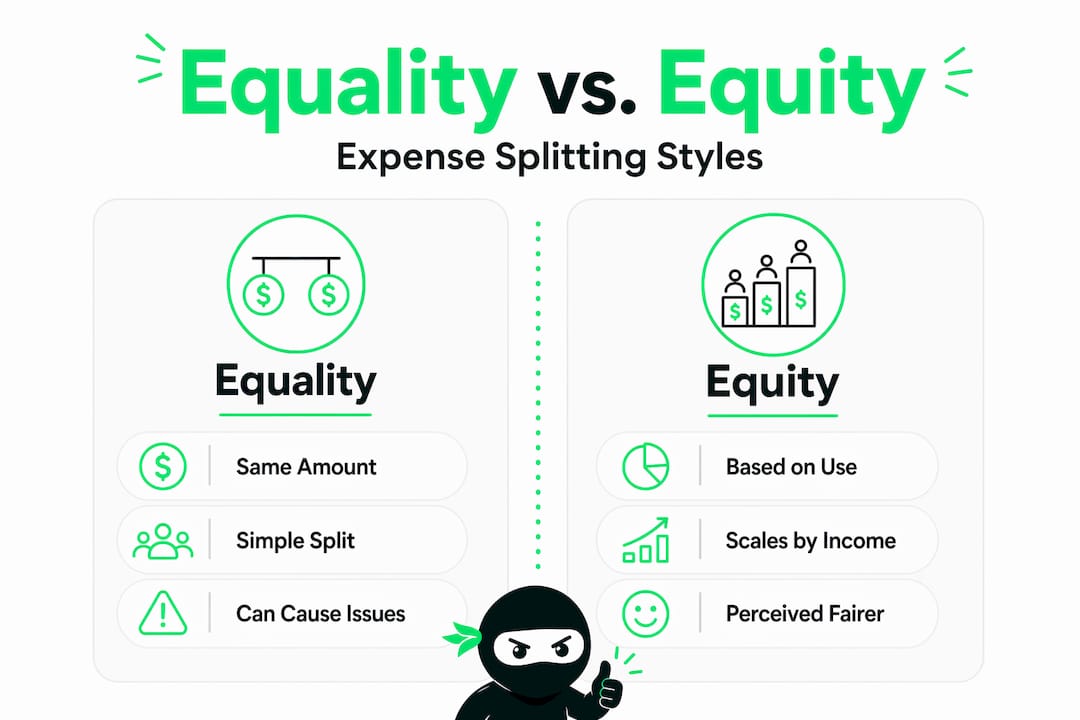
Equality means everyone pays the same amount, regardless of what they used or earned. Equity means contributions scale with consumption or income. Need means those with less capacity pay less, and those with more absorb a larger share. The problem? Most groups never discuss which norm they're using. They just assume everyone agrees.
That assumption is where conflicts are born. One roommate thinks splitting rent equally is obvious. The other thinks the person with the bigger room should pay more. Neither is wrong. They're just operating from different fairness frameworks.
Here's how these norms play out in real group scenarios:
- Equality: Four friends split a vacation rental four ways, regardless of who got the master suite.
- Equity: Each person pays for what they actually ordered at dinner, down to the last appetizer.
- Need: A boyfriend covering lunch for his girlfriend because she earns less.
"Fairness in group expenses is not a single principle but a balance among equality, equity, and need, depending on context and relationships." — Harvard Program on Negotiation
The key insight here is that no single norm works for every situation. The groups that handle money well are the ones that pick a norm together, out loud, before the bill arrives.
Common methods for splitting group expenses
Understanding fairness in theory is one thing. Applying it to a real dinner bill or a shared lease is another. Here are the main group expense calculation methods, with honest takes on when each one works and when it blows up.
| Method | Best for | Pros | Cons |
|---|---|---|---|
| Equal split | Same usage, similar income | Fast, no math required | Encourages overconsumption, feels unfair with uneven orders |
| Proportional by income | Long-term cohabitants, couples | Reflects affordability | Requires sharing private financial info |
| Itemized (pay what you ordered) | Restaurants, one-off purchases | Precise and fair | Slow, awkward, requires tracking |
| Usage-based | Utilities, subscriptions | Matches actual consumption | Needs clear usage data |
| Hybrid | Trips, complex shared living | Flexible and contextual | More complex to calculate |
The equal split is the most common method, but it comes with a real cost. Research shows that diners order 37% more food when they know the bill will be split equally. That's not a small rounding error. That's a meaningful shift in behavior driven purely by payment structure.

Proportional splits, where contributions scale with income or consumption, are often perceived as fairer in groups with uneven finances. Couples with different salaries, for instance, frequently find that income proportion splits reduce resentment compared to a strict 50/50 arrangement. The tradeoff is that someone has to share their income. That's a trust conversation, not just a math problem.
Itemized splitting is the most precise method but also the slowest. It works well at restaurants where orders vary widely, but it can kill the vibe if someone's calculating line items while everyone else wants to leave.
Pro Tip: For hybrid situations like a group trip, use equal splits for shared costs like accommodation and transportation, then switch to itemized for personal expenses like meals and activities. This gives you speed where it matters and precision where it counts.
The psychology behind perceived fairness
Here's what most guides on managing group finances miss entirely. Fairness isn't just a calculation. It's a feeling. And feelings don't follow spreadsheets.
Behavioral experts highlight that people separate expenses into mental categories, or "buckets," and evaluate each one differently. A $20 overpayment on a restaurant bill feels worse than a $20 windfall feels good. That's loss aversion at work, and it's one of the most powerful forces in group money dynamics.
Here's what this looks like in practice:
- Someone who fronts $400 for a group hotel feels the weight of that payment every day until they're reimbursed.
- Someone who owes $50 to three different people feels less urgency because the amounts seem small individually.
- A group member who quietly pays more than their share starts to feel used, even if no one intended that outcome.
"People evaluate fairness emotionally; practical systems should acknowledge timing, clarity, and mental accounting to succeed." — HRZone
Transparency and clear governance are the antidote to most of this friction. When everyone can see the numbers, the rationale, and the running balance, resentment has less room to grow. Explained decisions reduce disengagement, even when the amounts involved are small.
Pro Tip: Set your group's expense rules before the trip or the lease starts. A five-minute conversation about how you'll split costs saves hours of awkward texting later.
Practical strategies for fair expense sharing
Knowing the theory is useful. Having a system is what actually keeps friendships intact. Here are the best practices for expense sharing that work in the real world.
- Agree on a method before spending starts. Pick your fairness norm as a group. Equal, proportional, itemized. Whatever it is, name it out loud and get buy-in from everyone.
- Use a real-time tracking tool. Tracking expenses live with a shared app reduces errors and removes the "I thought you were tracking that" problem. Tools like Tab let you scan receipts, log costs instantly, and see a live balance at any time.
- Settle regularly, not at the end. Waiting until the last day of a trip to settle everything creates stress and disputes. A quick settlement every two or three days keeps balances small and tensions lower.
- Build in a small buffer for emergencies. For longer trips or shared living, agree on a small shared fund for unexpected group costs. Even $20 per person avoids the scramble when something breaks or plans change.
- Use the "entertainment tax" rule for small differences. If the difference per person is under $10, absorbing it as a social cost is often worth more than the time spent calculating it. Speed and harmony are real values.
- Document who paid what, always. Memory is unreliable. A shared log of payments removes ambiguity and protects relationships.
Pro Tip: If your group uses multiple currencies on a trip, pick one reference currency at the start and log everything in that. Converting at the end using different rates creates small but frustrating discrepancies.
Nuanced situations: rent, utilities, and trips
Some situations are straightforward. Others need a more tailored approach. Here's how to handle the most common complex scenarios.
Splitting rent fairly
Equal rent splits feel fair until you realize one person has a walk-in closet and an ensuite bathroom while another has a room that fits a twin bed and nothing else. Rent splits based on room size, adjusted for amenities, are more equitable and require upfront measurement and agreement.
A simple formula: calculate each room's share of total square footage, then apply a premium multiplier for extras like a private bathroom or outdoor access. Everyone sees the math. Everyone agrees before signing the lease.
| Room type | Base share | Amenity adjustment | Final share |
|---|---|---|---|
| Small room, shared bath | 28% | None | 28% |
| Medium room, shared bath | 33% | None | 33% |
| Large room, private bath | 39% | +10% premium | 39% |
Hybrid approaches that combine room size with income can produce even more nuanced fairness, but they require a higher level of trust and willingness to share personal financial information.
Handling utilities and trips
Utilities are trickier because usage varies. Someone who works from home uses more electricity than someone who's out all day. Options include:
- Splitting equally and accepting the approximation
- Tracking usage by device or behavior and splitting proportionally
- Rotating who pays which bill each month to average out over time
For group trips, the biggest challenge is usually that one or two people front large costs while others pay smaller amounts throughout. The person who books the Airbnb shouldn't have to wait a week to be reimbursed. Settle as you go, and use a tool that shows everyone the running balance so no one feels like they're chasing money.
My take: fairness is a social contract, not a formula
I've watched a lot of groups handle shared money well, and a lot handle it badly. The difference almost never comes down to which splitting method they used. It comes down to whether they talked about it.
The groups that fight about money are usually the ones who assumed everyone shared the same definition of fair. They didn't. One person thought equal meant fair. Another thought paying for what you used was the only honest approach. Neither said anything until the resentment was already there.
What I've learned is that even a slightly imperfect system, applied consistently and transparently, beats a theoretically perfect system that no one fully understands or trusts. The math is the easy part. The conversation is where fairness actually lives.
If your group can agree on the rules upfront, log expenses as they happen, and settle regularly, you've solved 90% of the problem. The remaining 10% is just rounding errors. And honestly, settling small differences quickly is more important socially than getting the math exactly right every single time.
Pick a system. Stick to it. Talk about it when it stops working. That's the whole thing.
— Seb
Stop chasing receipts. Start using Tab.
If you've ever spent the last night of a trip trying to reconstruct who paid for what from a chaotic group chat, you already know there's a better way.
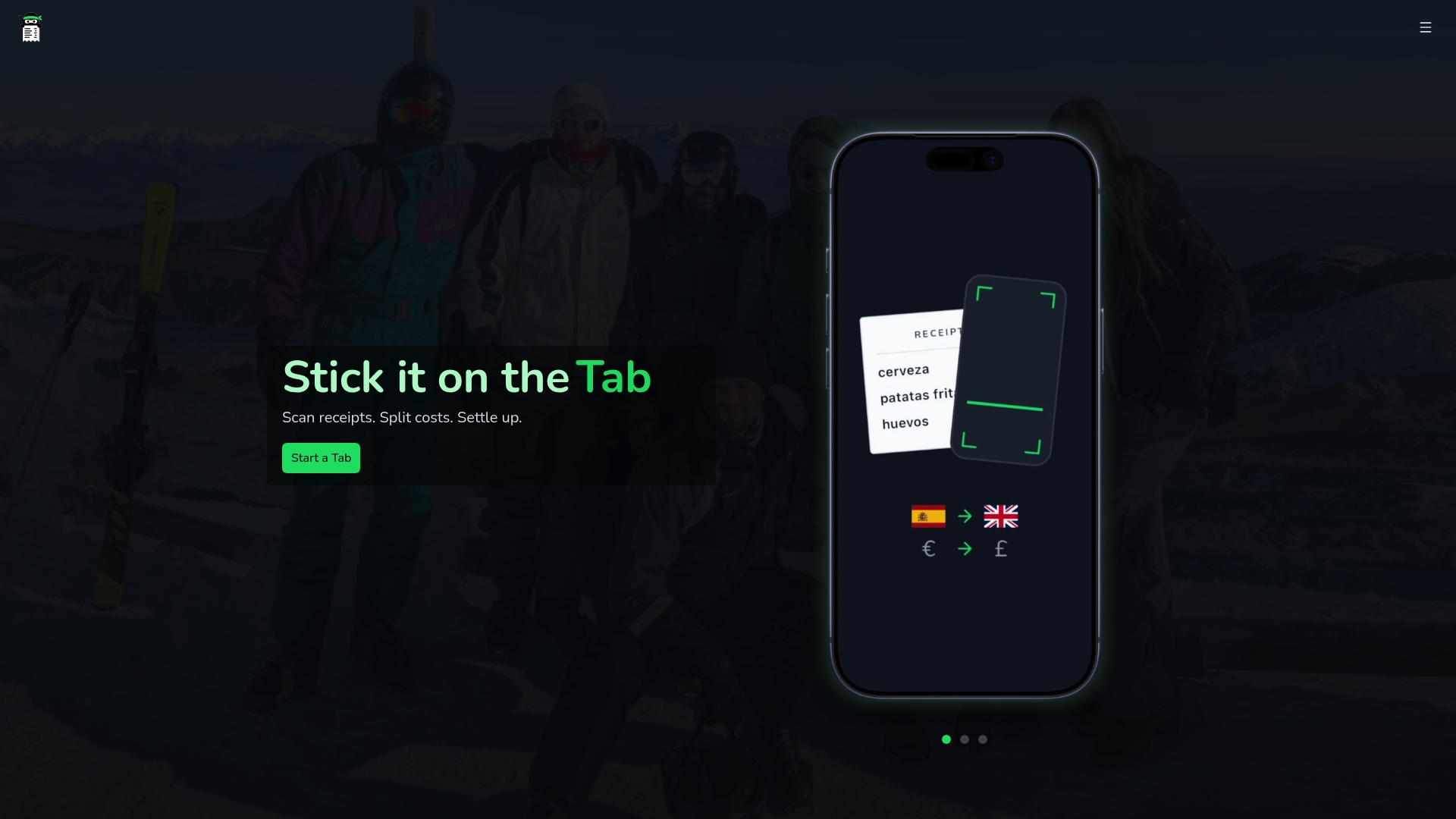
Tab is built for exactly this. You create a shared tab, scan receipts as you go, and Tab automatically calculates the smartest way to settle up with the fewest possible payments. No one needs to download the app to be included. Multi-currency support means international trips are no longer a headache. And the free tier gives you everything you need to manage group finances without spending a cent.
Whether you're looking for a free Splitwise alternative or just want a simpler way to handle group costs, Tab removes the friction. Start a free tab today and see what fair actually feels like.
FAQ
What does "fair" mean when splitting group expenses?
Fair can mean equal shares, proportional contributions based on usage or income, or need-based splits where lower earners pay less. The right approach depends on your group's context and what everyone agrees on upfront.
Why do equal splits often cause problems?
Equal splits can encourage overconsumption. Research shows diners order significantly more when they know costs will be divided equally, which means light spenders end up subsidizing heavy ones.
How should roommates split rent fairly?
The most equitable approach is to divide rent based on room size and adjust for amenities like private bathrooms or extra storage. Agreeing on the formula before moving in removes ambiguity and prevents future disputes.
What's the best way to handle group trip expenses?
Use equal splits for shared costs like accommodation and transportation, and itemized or usage-based splits for personal expenses. Settle balances every few days rather than waiting until the end of the trip.
How can an app help with fairness in group spending?
Expense tracking apps log costs in real time, show everyone a live balance, and calculate the minimum number of payments needed to settle up. This removes memory disputes and speeds up reimbursements significantly.